PUSHKAR
Located in the middle of Rajasthan, Pushkar is a religious centre and is 14km (9 miles) from Ajmer. The name Pushkar means 'a pond created by a flower' and, according to the Padam Purana (a Hindu religious text) came into being when Lord Brahma dropped three petals from a lotus flower down to earth in an attempt to kill a demon. At the point where each petal struck the ground, a lake formed. The largest of these is revered as one of India's most sacred sites, and is surrounded by temples and 52 bathing ghats.
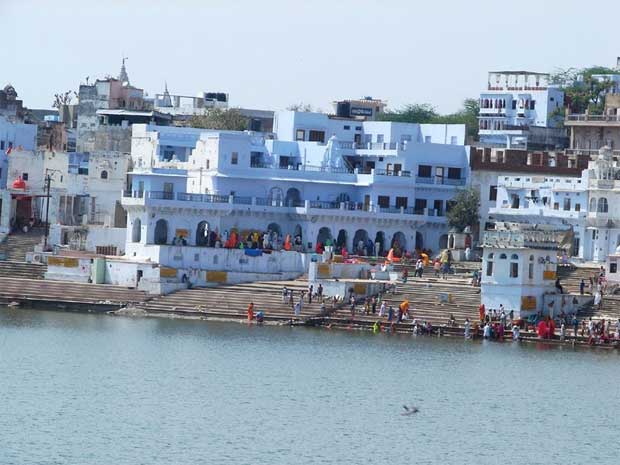
To bathe at Pushkar in one of these ghats is believed to be more important than at any other place in the world, because Pushkar is considered to be the home of Lord Brahma and is reputed to have the only temple in India dedicated to him. It is the prime reason why Hindu pilgrims visit the town.
Pushkar is considered to be one of the most important centres by Hindu devotees, so be careful not to offend. Photography is prohibited on the ghats while the devotees are bathing, and shoes are not allowed beyond the steps of the lake.
Narayan Sarovar is another sacred lake for Hindus located at western part of Gujarat state
For the wild life lovers among you, the area also has a thriving monkey colony which visits the lakes regularly foraging for food.
Pushkar Camel festival 🔝
Between October and November the famous five-day camel fair takes place. During this time, numerous competitions are held such as camel racing, horse racing, donkey racing, and camel-cart racing. In this part of India, the men sport very colourful (and large!) turbans and the women add to this riot of colour with their local village dress of gargara skirt, the design often specific to their caste or village. The festival itself is a major tourist attraction, but it is well worth hanging around after the racing for the "aarti" (evening prayers) after which hundreds of lamps are floated on the lake (known as "deepdan"), and the entire surface is illuminated.
Temperatures start to drop in October, reaching their lowest around mid January, so you'll need a warm pullover in the evening! The heat starts to build up from the festival of Holi at the end of Feb/beginning of Mar. By June, the heat can be intolerable and only the very brave (or the foolish) remain! Mid-July, the rains start to arrive and August sees the beginning of the monsoon season which brings cold winds, everything goes a lush green and the rivers start running.
Best Time to Visit Pushkar 🔝
The best time to visit Pushkar is from October to March when the weather is cool and pleasant. October and November are particularly special as this is when the famous Pushkar Camel Fair takes place during Kartik Poornima — the full moon night of the Hindu month of Kartik. During this period the town transforms completely, with pilgrims, traders, tourists and folk performers filling every corner. December and January are cooler, ideal for sightseeing and walking the ghats. February and March are warm and comfortable. Avoid visiting between April and June as temperatures in Pushkar regularly cross 40°C making outdoor activity very difficult. The monsoon arrives in July and lasts through September — while the landscape turns green, humidity is high and some ghats may be inaccessible.
How to Reach Pushkar 🔝
Pushkar does not have its own railway station or airport, but it is very easily reached from nearby Ajmer which is just 11 km away. By Train: Ajmer Junction is a major railway station with direct trains from Delhi, Jaipur, Mumbai, Jodhpur and Udaipur. From Ajmer, buses, taxis and auto rickshaws run frequently to Pushkar and take about 30 minutes. By Air: The nearest airport is Jaipur's Sanganer Airport, approximately 140 km from Pushkar. From Jaipur you can take a bus or hire a taxi to Pushkar, a journey of about 2.5 hours. By Road: Pushkar is well connected by road to Ajmer, Jaipur, Jodhpur and Udaipur. Regular RSRTC buses operate from Jaipur and Ajmer. From Jaipur the journey takes about 3 hours by road. Private taxis are available from all major Rajasthan cities and are the most convenient option if you are covering multiple destinations.
Brahma Temple — Jagatpita Brahma Mandir 🔝
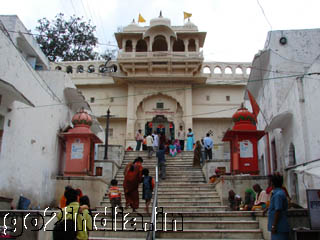
The Brahma Temple, formally known as Jagatpita Brahma Mandir, is the most prominent of Pushkar's 500+ temples and one of the very few temples in the world dedicated to Lord Brahma, the Hindu God of Creation. The current structure dates to the 14th century though the temple is believed to be over 2,000 years old, with the central marble idol of Lord Brahma consecrated by Adi Shankaracharya in 718 AD. The temple is built entirely of marble and stone, its most distinctive feature being a striking red shikhara (spire) about 70 feet tall, topped with a hamsa (swan) motif — Brahma's sacred mount. The silver doorway leads to the mandapa (pillared hall), and then to the garbhagriha (sanctum) where the chaumurti — the four-faced idol of Lord Brahma — sits in a cross-legged position facing all four directions. The marble floors and walls are inlaid with hundreds of silver coins donated by devotees with their names inscribed as offerings. A silver turtle is displayed on the mandapa floor facing the sanctum.
An interesting rule at this temple is that only ascetic priests (sanyasis) are permitted inside the sanctum — married men must offer their prayers from the outer hall through a priest. Three daily artis are performed: Mangala arti in the early morning before sunrise, Sandhya arti in the evening about 40 minutes after sunset, and Ratri Shayan arti late at night. The Kartik Poornima festival in October/November is the most auspicious time to visit when thousands of pilgrims gather to bathe in Pushkar Lake and offer prayers at the temple. After visiting the Brahma Temple, tradition holds that a visit to the Savitri Temple on Ratnagiri hill behind the temple is essential to complete the pilgrimage — the one-hour trek up the hill offers a spectacular view of the lake and the desert beyond.
| Detail | Information |
|---|---|
| Entry Fee | Free — no entry charge |
| Winter Timings | 6:30 AM – 1:30 PM and 3:00 PM – 8:30 PM |
| Summer Timings | 6:00 AM – 1:30 PM and 3:00 PM – 9:00 PM |
| Closed | 1:30 PM – 3:00 PM daily (afternoon break) |
| Dress Code | Remove footwear before entering. Modest clothing recommended |
| Photography | Not permitted inside the sanctum |
| Suggested duration | About 1 hour |
Buses 🔝
A bus from the main bus station in Ajmer takes you into Pushkar (about half an hour). From there, bus services are available to Delhi, Haridwar and most of the major tourist towns of Rajasthan. Ajmer is a major railway station and connects you to a lot of India. Jaipur is about two and a half hours away from Ajmer by bus or train.
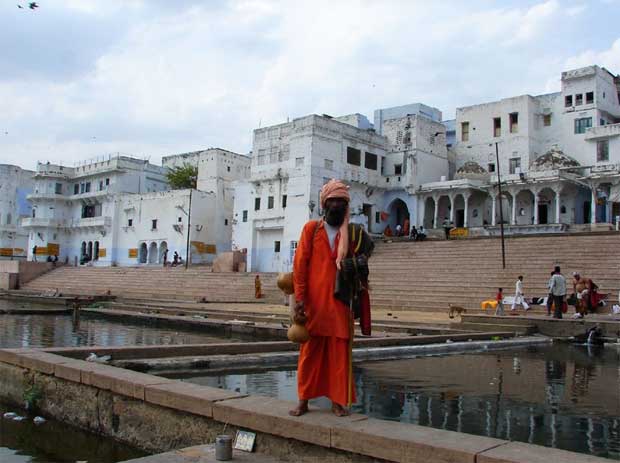
There are quite a few nice temples tucked into the mountains around the area (for mountains, read large rocky hills) which are great for picnics. You can also take a camel safari into the desert.
| Destination | Distance from Pushkar |
|---|---|
| Ajmer | 11 KM |
| Jaipur | 140 KM |
| Delhi | 415 KM |
| Udaipur | 295 KM |
Number of User Comments : 2
Tweet
| surendra jat | 04-04-2012 |
| i like i doing job in kila | |
| Ramakant | 05-08-2012 |
| this is very interesting and useful info containing site for trevelling people... i got all the information which i needed to know | |